How to Clean Subfloor After Removing Carpet: The Expert Guide
Key Takeaways
-
Three subfloor materials - plywood, lumber, and concrete - each require different cleaning methods and moisture limits. Match the method to the material or you risk damage.
-
Old carpet adhesive left on the subfloor will prevent proper adhesion for new flooring and create an uneven surface that telegraphs through finished floors.
-
Pet urine is the most common serious contaminant found in subfloors; enzymatic cleaners are required to break down uric acid crystals that plain water and vinegar cannot neutralize.
-
Concrete subfloors are the most forgiving to clean but must be sealed before new flooring installation to block moisture vapor from below the slab.
-
Skipping the subfloor inspection after carpet removal is one of the top causes of premature flooring failure and costly re-dos.
Cleaning the subfloor after removing carpet means removing staples, tack strips, adhesive residue, stains, and any odor contamination using the correct method for your subfloor material - plywood, lumber, or concrete.
This step matters more than most homeowners realize. A dirty or contaminated subfloor traps odors, creates uneven surfaces, and causes adhesion failure under any new flooring you install on top. Get it right once, and you won't be pulling the floor up again in two years.
This guide covers the 3 most common subfloor materials, the right products for each, and the professional approach to pet urine and adhesive removal.
Why You Need to Clean the Subfloor After Removing Carpet
Cleaning the subfloor after carpet removal is necessary because years of foot traffic, pet accidents, and spills push contaminants through carpet fibers and padding directly into the structural layer beneath.
When you pull up old carpet, what you find underneath is rarely just dust. Expect some combination of embedded dirt ground in over years, dried carpet padding cement or adhesive blobs, pet urine crystallized into wood or concrete pores, and rust stains from tack strip nails. Laying new flooring over any of those issues creates a time bomb. Odors re-emerge on humid days. Adhesive buildup prevents a level bond. Untreated urine contamination continues to off-gas through the new surface for months.
Professionals know this stage can't be skipped. According to the National Wood Flooring Association (NWFA), subfloor preparation - including cleaning, flatness, and moisture testing - is one of the leading factors in the long-term performance of installed hardwood and engineered flooring.
If you've dealt with removing dark stains from hardwood floors, subfloor cleanup takes it further. You're working on a structural layer that was never meant to be seen, so it's rarely been protected or maintained.

How to Clean Subfloor After Removing Carpet: By Material Type
There are 3 common subfloor materials - plywood, lumber, and concrete - and each one has a different tolerance for moisture, abrasion, and cleaning chemicals.
The table below gives you a quick reference before you start. Choosing the wrong approach for your subfloor type wastes time at best and causes structural damage at worst.
|
Factor |
Plywood |
Lumber |
Concrete |
|
Moisture tolerance |
Moderate |
Low |
High |
|
Adhesive removal |
Vinegar solution + scraper |
Heat gun + scraper |
Chemical stripper or scraper |
|
Odor treatment |
Enzymatic cleaner |
Enzymatic cleaner + sealer |
Enzymatic cleaner + sealer |
|
Sanding option |
No (damages veneer) |
Yes |
No |
|
Sealing recommended |
Optional |
Optional |
Strongly recommended |
This table compares the core cleaning factors across the 3 most common subfloor types. Match the column to your material before selecting products or methods.
Plywood Subfloor
Plywood subfloors handle water-based cleaning better than solid lumber because the cross-laminate construction resists seasonal swelling. That doesn't mean you can soak it - it means you have more margin for error before damage sets in.
The most practical basic method for cleaning a plywood subfloor after carpet removal uses a 1:1 vinegar-and-water solution:
-
Mix equal parts white vinegar and water in a bucket.
-
Dampen - don't saturate - a mop or cleaning cloth with the solution.
-
Scrub the surface and let it sit for 3-5 minutes to break down residue.
-
Rinse with a clean, lightly damp cloth and allow the floor to dry fully before proceeding.
The vinegar smell clears fast with ventilation. Open windows, run a fan, and don't rush drying - plywood that stays damp for more than a few hours can begin to delaminate at panel edges.
If you find pet urine staining on a plywood subfloor, a straight vinegar solution won't get the job done. Switch to an enzymatic cleaner formulated for urine, which chemically breaks down urea and uric acid crystals rather than masking them. Apply generously, cover with plastic sheeting to retain moisture, and allow 15-30 minutes of dwell time before extracting.
One technical note worth knowing: because the wood veneer layers in plywood are arranged and glued with grains in opposing directions, expansion and contraction from seasonal changes are significantly reduced compared to solid lumber. That cross-grain stability is why water-based cleaning is safer here.

Tips for Cleaning Plywood Subfloors After Removing Carpet
-
Check for soft spots before cleaning. A spongy feel underfoot means water damage has compromised the panel and it may need replacement rather than cleaning.
-
Pull every staple left by the old carpet pad. Staples rust quickly once exposed, creating new iron staining in the wood.
-
You can't sand badly damaged plywood the way you can with solid wood. The veneer layers are too thin - sanding through even one layer reduces structural stability and creates an uneven surface. Treat stains chemically, not mechanically.
-
For how to remove sticky residue from hardwood floors, the same flat-blade scraper technique works on plywood adhesive spots.
Lumber Subfloor
Lumber (solid wood board) subfloors are more vulnerable to water damage than plywood. Solid wood swells, shrinks, and warps with excess moisture. Once a board cups or buckles, it's expensive to fix - and the problem telegraphs through whatever you put on top.
The priority here is adhesive removal with minimal moisture, and the most effective tool for that job is heat.
Here's the full process:
-
Use a heat gun, a steam iron held several inches above the surface, or a hair dryer to soften carpet adhesive patches.
-
Move the heat source slowly across each patch. The adhesive will become tacky and slightly glossy when it's ready.
-
Immediately follow with a flat-bladed floor scraper to lift the softened material away.
-
Work in small sections - adhesive re-hardens as it cools, so don't heat more area than you can scrape in 30-60 seconds.
Once adhesive is removed, clean residue with a pH-neutral hardwood floor cleaner applied sparingly to a barely damp mop. For professional-grade results on lumber subfloors, our wood floor cleaning collection has the right tools and chemicals for the job.
Where lumber subfloors have an advantage over plywood: you can sand them. Light sanding with a floor sander removes surface staining, smooths rough patches, and levels minor height variations between boards. This is not an option with plywood veneers.
For stripping and scrubbing a lumber subfloor after carpet removal, the Orbot Vibe floor machine is the professional's choice. Its orbital scrubbing action works effectively on wood and stone without the aggressive torque that damages soft wood grain. It also handles carpet and tile areas, making it one of the most versatile machines a cleaner can carry.

Tips for Cleaning Lumber Subfloors After Removing Carpet
-
Avoid mopping with standing water. Use a damp-not-wet approach and follow immediately with dry towels or a fan.
-
If pet urine has penetrated the wood grain, it requires enzymatic treatment - not scrubbing. Uric acid crystals form inside the grain and re-activate on humid days. See our full guide on how to get cat urine out of a wood subfloor for the step-by-step approach.
-
Squeaky boards after carpet removal usually mean loose fasteners. Drive additional screws before laying new flooring. A squeak only gets worse under a hard surface with no give.
-
Don't leave the wood wet for too long when removing sticky adhesive residue from hardwood floors. Moisture is the enemy of dimensional stability in solid wood.
-
A lumber subfloor is otherwise strong and resilient. Sanding down to a smooth surface is a reliable option when staining is moderate and the boards are structurally sound.
Concrete Subfloor
Concrete subfloors are the most forgiving to clean after carpet removal. Concrete handles water, stronger chemical cleaning agents, and aggressive scrubbing that would destroy a wood subfloor. That's the good news.
The main challenges specific to concrete are: adhesive removal (older black cutback adhesive often requires a chemical mastic remover or floor grinder), pet urine penetration into the concrete's porous surface, and moisture vapor transmission rising from below the slab.
For professional-grade concrete subfloor cleaning, Concrete Master Professional Concrete Cleaner handles the job. Use it in a hot water extraction machine at the dosage listed on the bottle. It's not limited to subfloors - Concrete Master also works on masonry, tile, grout, and brick, making it a practical addition to any service van. Browse the full concrete cleaning equipment collection for compatible tools.

Step-by-step process for cleaning a concrete subfloor:
-
Remove all tack strips with a pry bar. Use pliers to pull any remaining nails. Grind down any concrete spurs left behind.
-
Scrape adhesive residue with a floor scraper. For old or thick black adhesive, apply a chemical mastic remover and follow the dwell time on the label.
-
Sweep the entire surface, then vacuum with a shop vac to pull up loose debris.
-
Apply Concrete Master in a hot water extractor. Allow the solution to dwell for the recommended contact time.
-
Scrub with a stiff-bristle floor brush or orbital floor machine.
-
Extract or mop up the solution. Allow 24-48 hours of drying time in most conditions.
-
If pet urine contamination is present, apply an enzymatic urine cleaner, cover with plastic sheeting, and allow 15-30 minutes of dwell time before rinsing.
Sealing the Concrete Subfloor Before New Flooring
Even though concrete handles being washed down, it is not impervious to moisture vapor rising from below the slab. That vapor can delaminate adhesive-down flooring, buckle engineered hardwood, or create mold growth under luxury vinyl planks - all problems that won't appear until months after installation.
Before laying any new flooring over a concrete subfloor, seal the surface. Rob's Solvent Sealer is a penetrating impregnating sealer that works on concrete, stone, and hard surfaces. Apply it to the clean, dry slab using a pump sprayer, or pour it directly onto the surface and spread with a Flat Mop Finish Applicator. It dries clear and locks down residual odors, ambient moisture, and minor surface staining.

Tips for Cleaning Concrete Subfloors After Removing Carpet
-
Black cutback adhesive on concrete in homes built before 1980 may contain asbestos. Test the adhesive before scraping or grinding. If asbestos is present, encapsulate rather than attempt removal.
-
Conduct a moisture test before choosing flooring adhesive. Tape a plastic sheet to the concrete slab for 24 hours. Visible condensation underneath indicates high vapor emission that will cause adhesive failure.
-
Concrete pH can affect some flooring adhesives and coatings. After cleaning, test the surface pH and allow it to stabilize before applying any product.
When the Problem Is Deeper: Pet Urine in Subfloors
Pet urine contamination is the most common serious subfloor problem professional cleaners encounter when carpets come up. Urine soaks through carpet, through padding, and into the subfloor over months or years of repeated accidents. By the time the carpet is removed, the subfloor can be heavily saturated.
Standard cleaning alone does not solve this. Uric acid crystals embedded in wood or concrete re-activate with humidity, releasing ammonia odor through any new flooring. The only approach that works is enzymatic treatment - not dilution, not bleach, not masking with fragrance.
Apply enzymatic cleaner generously to affected areas, cover with plastic sheeting to retain moisture, and allow at least 15-30 minutes of dwell time. The enzyme needs moisture and time to chemically break down urea and uric acid molecules.
For particularly severe cases on wood subfloors, follow enzymatic treatment with a shellac-based primer (such as Zinsser BIN) to lock any remaining odor molecules inside the wood grain before new flooring goes down. This two-step process - enzymatic treatment then seal - is the professional standard for subfloor urine remediation.
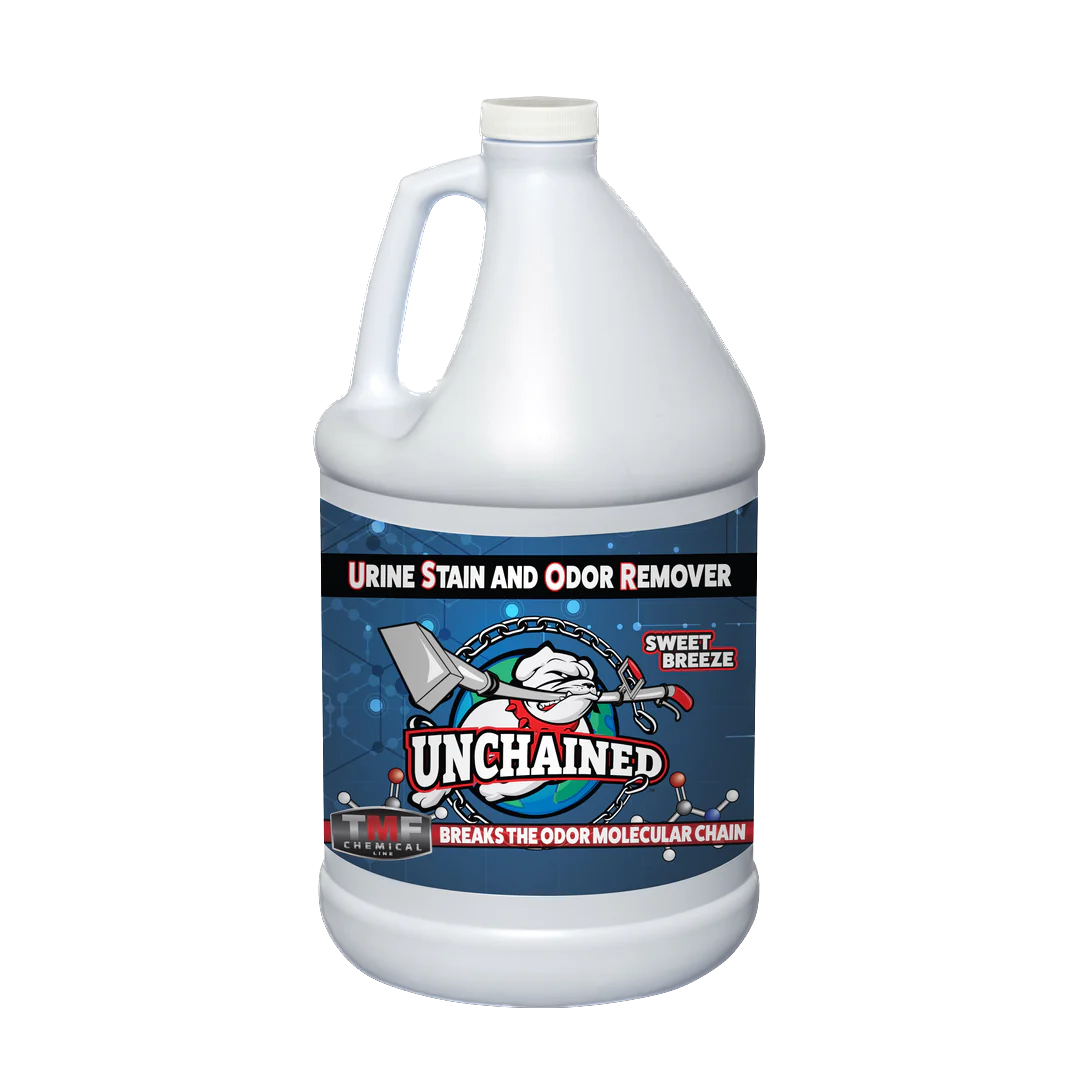
The TMF Store carries a full range of pet odor and enzymatic urine treatment products built for this level of deep contamination.
Preparing the Subfloor for New Flooring: Final Checks
Cleaning the subfloor is one half of the preparation job. The other half is confirming the surface is structurally ready before anything new goes down.
Check these four factors before you proceed:
-
Flatness: hard flooring (LVP, hardwood, tile) requires a subfloor flat to within 3/16" over a 10-foot span. Use a long straightedge, mark high and low spots, and address them with self-leveling compound or sanding before installation.
-
Moisture content: most flooring adhesives and installations specify a maximum subfloor moisture content. Measure with a pin-type moisture meter before committing to any adhesive or floating floor system.
-
Fasteners: all screws and nails must sit flush with or below the subfloor surface. A protruding fastener head telegraphs through vinyl, hardwood, and laminate flooring.
-
Squeaks: squeaky boards mean loose fasteners. Add screws to secure every board before new flooring goes down - access becomes difficult or impossible once the surface layer is installed.
Explore the full range of hard surface accessories to carry this process through to the finished surface.
FAQ: How to Clean Subfloor After Removing Carpet
Can I mop a plywood subfloor after removing carpet? Yes, but use a damp - not wet - mop. Excess water causes plywood to swell and delaminate. Use a diluted vinegar-and-water solution, scrub lightly, and dry immediately with good airflow. Never leave standing water on a plywood surface.
How do I remove carpet adhesive from a wood subfloor? Apply heat with a heat gun or steam iron held several inches above the adhesive to soften it, then scrape immediately with a flat-bladed floor scraper. Work in small sections so the adhesive does not re-harden before you lift it. Follow up with a pH-neutral cleaner on a barely damp cloth.
How do I get pet urine smell out of a subfloor? Use an enzymatic cleaner specifically formulated for urine. Apply generously, cover with plastic sheeting to retain moisture, and allow 15-30 minutes of dwell time before extracting or rinsing. On wood subfloors, follow enzymatic treatment with a shellac-based sealer to lock in any remaining odor before laying new flooring.
Should I seal a concrete subfloor before laying new flooring? Yes. Sealing a concrete subfloor prevents moisture vapor from below the slab from damaging adhesives, warping engineered wood planks, or causing mold growth under vinyl flooring. A penetrating impregnating sealer applied to a clean, dry slab gives the best long-term result.
Can I sand a plywood subfloor to remove stains? No. Plywood veneers are thin - typically 1/16" to 1/8" per layer - and sanding through even one layer creates uneven thickness and structural weakness. Treat plywood stains chemically with an appropriate enzymatic or vinegar-based cleaner rather than abrasively.
What is the best way to clean a concrete subfloor after carpet removal? Remove all tack strips and scrape off adhesive residue first. Then clean with a professional concrete cleaner in a hot water extractor. Allow 24-48 hours of drying time, apply enzymatic treatment to any pet urine areas, and seal the slab with a penetrating sealer before new flooring installation.
Do I need to remove all carpet staples before cleaning the subfloor? Yes, always. Staples left in the subfloor rust quickly once exposed, creating new iron staining in wood and puncturing the underside of new padding or adhesive layers. Use a floor scraper and pliers to pull every staple before any cleaning begins.
How long should I wait before laying new flooring after cleaning the subfloor? At minimum, allow 24 hours of drying time after water-based cleaning, and 48 hours after concrete cleaning with extraction. Perform a moisture test before committing to adhesive or flooring installation. High residual moisture is the most common cause of premature flooring failure.
Conclusion
Cleaning the subfloor after removing carpet is what separates a renovation that holds up from one that fails inside two years. Match your method to your material: plywood takes a damp vinegar solution, lumber needs heat and minimal moisture, and concrete handles full chemical cleaning but must be sealed before anything new goes down. Address pet urine with enzymatic treatment - not scrubbing alone. Confirm the surface is flat, dry, and free of protruding fasteners before installation begins. The work here is unglamorous, but it's what every professional gets right before the floor goes in.
References
-
National Wood Flooring Association (NWFA) - "NWFA Installation Guidelines" - 2024 - https://www.nwfa.org/education/installation/
-
U.S. Environmental Protection Agency (EPA) - "Asbestos in Your Home" - 2023 - https://www.epa.gov/asbestos/asbestos-your-home
-
U.S. Environmental Protection Agency (EPA) - "A Brief Guide to Mold, Moisture, and Your Home" - 2023 - https://www.epa.gov/mold/brief-guide-mold-moisture-and-your-home