How to Remove Pet Urine from Subfloor: A Step-by-Step Guide for Permanent Odor Elimination
Pet urine that soaks through carpet and padding into the subfloor won't go away on its own - but an enzymatic cleaner followed by a proper sealer will eliminate it permanently. The key is treating the subfloor itself, not just the surface above it. Skip this step and the odor will keep coming back, no matter how many times you shampoo the carpet. Here's exactly how professionals handle subfloor urine damage, from finding every hidden stain to locking out odor for good.
Why Does Pet Urine Smell So Bad in a Subfloor?
What Makes Pet Urine Different from Other Stains?
Pet urine isn't just liquid - it's a complex biological cocktail. It contains urea, urochrome, uric acid, bacteria, ammonia, and hormones. Most of these components break down and dissipate over time. The problem is uric acid. It forms insoluble crystals that bond tightly to porous surfaces like wood and concrete. Standard carpet cleaners and household disinfectants don't touch these crystals. They may mask the smell temporarily, but the moment humidity rises, the crystals reactivate and release that unmistakable ammonia odor all over again.
This is why subfloor urine is a fundamentally different problem from carpet urine. The carpet acts as a wick, pulling urine downward through the padding and straight into the wood below. By the time you notice the smell, the subfloor has often been soaked through multiple incidents over months or even years.
Why Is Cat Urine Harder to Remove Than Dog Urine?
This is a detail most guides skip - and it matters. Cat urine contains a significantly higher concentration of ammonia than dog urine, making it more potent and more damaging to wood surfaces. The odor molecules from cat urine can take years to fully break down on their own. Cat urine is also more acidic, which means it can erode the finish on wood floors and cause deeper structural damage over time if left untreated.

If you're dealing with cat urine specifically, expect to apply the enzymatic cleaner more aggressively and allow longer dwell times compared to dog urine treatment. Old multi-cat household stains - especially those layered over years - are among the most difficult subfloor remediation jobs a professional will encounter.
Why Does the Odor Come Back Even After Cleaning the Carpet?
This is one of the most common frustrations homeowners and landlords face. You replace the carpet, install fresh padding, and within weeks the smell returns. The reason is simple: you treated the symptom, not the source.
Uric acid crystals embedded in the wood subfloor don't care about new carpet. High humidity days - especially in spring and summer - rehydrate those crystals. The odor molecules become airborne again, rising through the new flooring. Until the subfloor itself is treated and sealed, the cycle never ends.
Pro Tip: If a room still smells after new carpet installation, lift a corner and inspect the subfloor. Dark staining or a strong ammonia odor when you get close to the wood confirms the problem is below, not above.
How to Remove Pet Urine from Subfloor - Step by Step
Step 1 - Find Every Affected Area (Use a UV Light)
Before you apply any cleaner, you need to map the full extent of the damage. Pet urine fluoresces under ultraviolet (UV) light, making stains visible even after they've dried and turned invisible to the naked eye. Turn off all lights and scan the subfloor with a UV blacklight - stained areas will glow yellow-green.
Don't skip this step. It's common to find that the affected zone is two or three times larger than the visible stain on the surface. Mark the boundaries with chalk or tape so you know exactly where to treat.
A quality UV detection light makes this process fast and accurate. The TMF UV Light and TMF Bad Boy UV Detection Light are built specifically for this kind of inspection work and cover large areas quickly.
Pro Tip: Do your UV inspection at night or in a fully darkened room. Even small amounts of ambient light will make faint stains harder to spot.

Step 2 - Choose the Right Cleaner for Your Subfloor Type
Not all subfloor materials respond the same way to treatment:
-
Plywood - The most forgiving. Urine penetrates but usually stays in the upper layers. Enzymatic cleaners work well here.
-
OSB (Oriented Strand Board) - Similar to plywood but slightly more absorbent. Treat aggressively and allow full drying time.
-
Particleboard - Highly porous and absorbs urine deep into its structure. In most cases, saturated particleboard sections must be cut out and replaced - enzymatic cleaners rarely penetrate deeply enough to be effective.
-
Concrete - Requires a different approach (covered below). Enzymatic cleaners still help but a penetrating concrete sealer is critical afterward.
For plywood and OSB, an enzyme-based cleaner with protease enzymes is your best tool. Protease specifically breaks down protein-based biological stains - exactly what uric acid crystals are. Products like BioPro 10K and USOR Unchained are formulated for deep biological contamination and are used by professional restoration crews.

If you don't have an enzymatic cleaner on hand, a DIY solution of baking soda, white vinegar, mild dish soap, and warm water can help neutralize surface odors as a first response. Mix half a cup each of baking soda, white vinegar, and dish soap with 2 cups of warm water. Apply to the affected area, agitate with a mop or cloth, then rinse with clean water. This is a stopgap, not a permanent fix - enzymatic cleaners are necessary to break down uric acid crystals at a molecular level.
Step 3 - Apply Enzymatic Cleaner and Let It Work
This is where most DIY attempts fail - people don't use enough product and don't allow enough dwell time.
Here's the correct method:
-
Saturate the stained area generously. You need the enzymatic cleaner to penetrate as deeply as the urine did. Don't mist - soak. The cleaner needs to reach every crystal.
-
Cover with plastic sheeting. This prevents the cleaner from evaporating too quickly and forces it to stay in contact with the wood. Tape down the edges.
-
Allow a minimum of 24 hours of dwell time. For severe or old stains, 48 hours is better. The enzymes are biological - they need time to break down the uric acid crystals at a molecular level. Rushing this step wastes the product.
-
Remove the plastic and allow the wood to air dry completely. Do not rush to the next step while the subfloor is still damp.
For very heavy contamination - think rental properties with years of pet accidents - a second application is often necessary. Apply again, cover, wait, and dry before assessing.
Pro Tip: Warm temperatures help enzymatic cleaners work faster. If the space is cold, a portable heater can improve effectiveness significantly. Avoid temperatures below 50°F (10°C) - enzyme activity slows dramatically in the cold.
Step 4 - Dry the Subfloor Completely Before Moving On
This step is non-negotiable. Sealing a wet subfloor traps moisture, which leads to mold, wood rot, and odor problems far worse than the original urine issue.
Use fans and dehumidifiers to accelerate drying. In humid climates or basements, this can take 48-72 hours after the final enzymatic treatment. A moisture meter will tell you when the wood has returned to an acceptable moisture content (generally below 12% for wood subfloors).
If a faint odor still lingers after drying, sprinkle baking soda over the area and leave it overnight before sweeping it up. This won't eliminate deep uric acid crystals, but it effectively absorbs residual surface odors before sealing.
Pro Tip: Point a fan directly across the subfloor surface rather than straight down. Cross-ventilation moves moisture-laden air out of the space more efficiently.
Step 5 - Seal the Subfloor to Lock In Odor Permanently
Once the subfloor is clean and fully dry, sealing is what makes the result permanent. A stain-blocking primer or sealer encapsulates any residual uric acid crystals that the enzymatic cleaner couldn't fully break down, preventing them from ever off-gassing again.
Oil-based stain-blocking primers (like Kilz Original or Zinsser BIN Shellac-based primer) are the gold standard for severe cases. Water-based options work for lighter contamination. Apply two to three coats, allowing full drying between each coat.
For concrete subfloors, use a penetrating concrete sealer rather than a surface primer - it soaks into the pores rather than sitting on top.
Does the Type of Subfloor Change How You Clean It?
Plywood Subfloor - Treatable in Most Cases
Plywood is the best-case scenario for urine remediation. Its layered grain structure limits how deeply urine can penetrate, and enzymatic cleaners combined with a sealer will resolve most contamination. Even heavy staining from years of pet accidents is usually salvageable if you follow the full process.
Particleboard Subfloor - When Replacement Is the Only Option
Particleboard is the worst-case scenario. It acts like a sponge - absorbing urine completely and holding it throughout the material. If particleboard is saturated, cut it out. There's no reliable way to neutralize uric acid crystals that are distributed throughout the entire thickness of the board. Attempting to treat it wastes time and money.
The good news: replacing a section of particleboard subfloor is straightforward carpentry work. Cut out the affected section with a circular saw set to the exact depth of the board, install new material, and treat the perimeter seams before installing new flooring.
Concrete Subfloor - A Different Approach Entirely
Concrete seems impermeable but it's actually quite porous. Urine soaks into the surface layer and the crystals become embedded in the concrete matrix. Standard enzymatic cleaners still help - apply generously, allow long dwell time, and rinse thoroughly. But the critical step with concrete is sealing with a penetrating concrete sealer that fills the pores and prevents reactivation.
For severe concrete contamination, an Ecocide-based odor remover used before sealing adds an antimicrobial layer that kills residual bacteria along with neutralizing odors.

When Should You Replace the Subfloor Instead of Cleaning It?
Signs the Damage Is Too Deep to Treat
Replace rather than clean when you see:
-
Structural softness or sponginess when walking on the subfloor - indicates rot from prolonged moisture exposure
-
Black or dark brown staining that penetrates fully through the board
-
Visible mold growth on or under the subfloor
-
Particleboard material that is visibly swollen, crumbling, or delaminating
-
Odor that persists after two full enzymatic treatment cycles
When replacement is required, treat the surrounding subfloor and the joists below before installing new material. Urine can wick onto the framing too - missing this step means the new subfloor will absorb odor from below.
How to Cut Out and Replace a Damaged Section
Set your circular saw blade to the exact thickness of the subfloor (typically 3/4 inch). Cut along joist lines so the new section has solid support at its edges. Secure the replacement panel with construction adhesive and ring-shank nails or screws. Treat the perimeter seam with enzymatic cleaner before installing new flooring on top.

Pro Tips to Make Sure the Odor Never Comes Back
Why Humidity Reactivates Urine Crystals - and How to Stop It
Even after successful treatment, high humidity environments can reactivate trace amounts of residual uric acid that weren't fully neutralized. This is especially common in basements, ground-floor units, and humid climates.
The solution is twofold: thorough enzymatic treatment plus a complete seal coat. In consistently humid spaces, a vapor barrier beneath the flooring adds another layer of protection. Running a dehumidifier seasonally keeps relative humidity below 50%, which is below the threshold where uric acid crystals become volatile again.
The Best Professional Products for Subfloor Urine Removal
Based on what professional cleaning crews use in the field:
-
Enzyme prespray: BioPro 10K - high-concentration enzyme formula designed for severe biological contamination
-
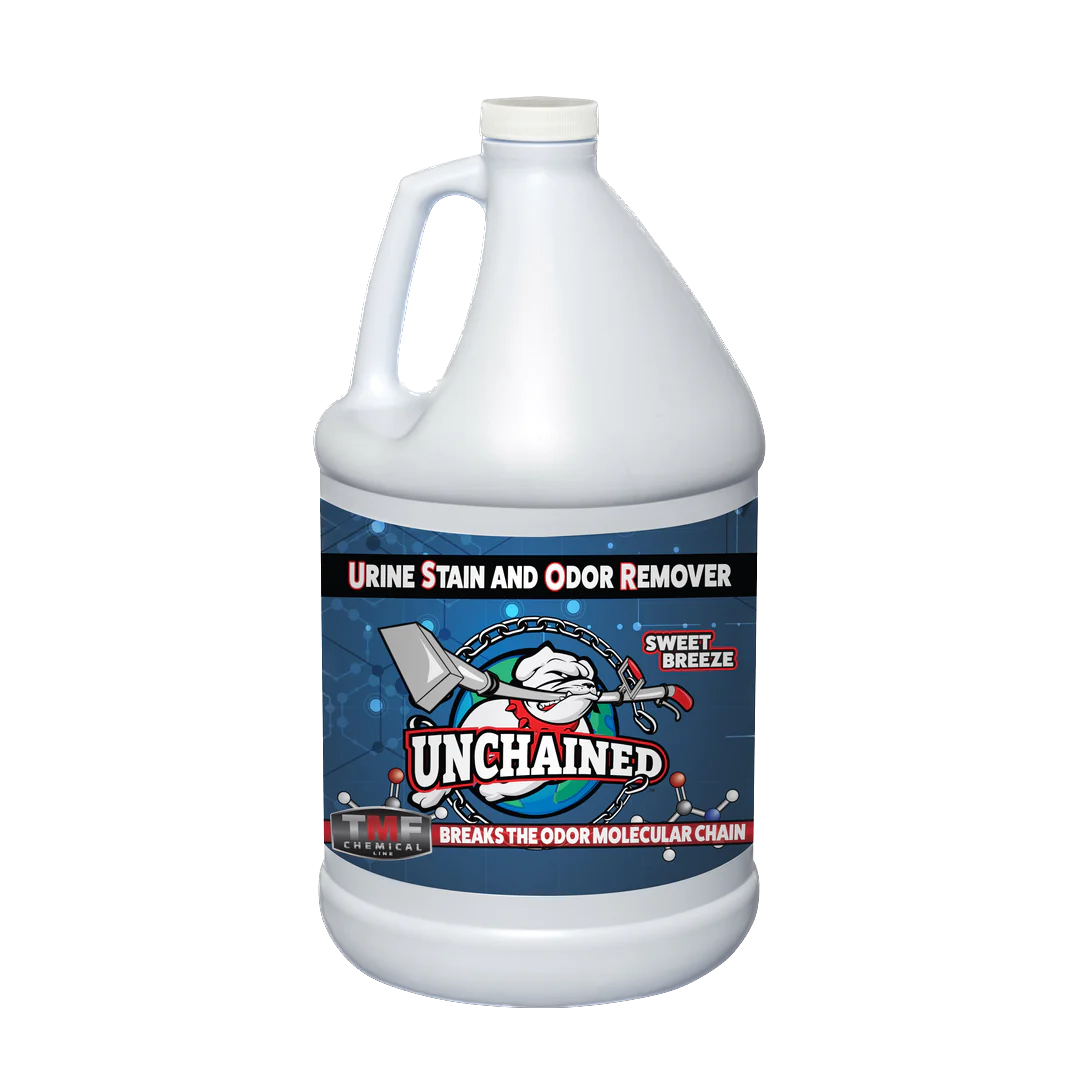
Odor + stain remover: USOR Unchained - combines enzymatic action with Ecocide antimicrobial technology
-
UV detection: TMF Bad Boy UV Light - large-format inspection light for fast area coverage
-
Odor deodorizer: Ecocide Sweet Breeze - for final deodorizing after enzymatic treatment
-
Floor machine for agitation: The Orbot Vibe is the go-to machine for professionals who need to work cleaning solution deep into wood and hard surface floors efficiently - far more effective than cleaning by hand
For professional-grade pet odor removal training, the Pet Urine Odor Removal Online Course covers subfloor treatment in depth alongside carpet and upholstery protocols.
How to Prevent Future Subfloor Damage from Pet Accidents
Once you've done the work to remediate a subfloor, protecting it going forward is much simpler than treating it again:
-
Address carpet accidents immediately. The faster you blot up surface urine, the less reaches the subfloor. Time is everything - urine that sits for hours soaks far deeper than urine cleaned up within minutes.
-
Protect new flooring at installation. When laying new carpet, treat it with Rob's Solvent Sealer - it impregnates the surface fibers and creates a protective barrier without affecting texture or feel. It also works on upholstered furniture.
-
Use a quality carpet protector after professional cleaning. See the protectors collection for fluorochemical fiber protectors that cause liquids to bead on the surface rather than absorbing.
-
Consider waterproof underlayment when installing new flooring - it acts as a barrier preventing future accidents from ever reaching the wood below.
-
Treat accidents at the source with a fast-acting pet odor and stain remover before they have a chance to penetrate.
For a deeper look at the full urine removal process - including upholstery and hard surfaces - the urine removal collection and the Top 50 Urine Odor Removers guide are worth bookmarking.

Conclusion
Removing pet urine from a subfloor comes down to three non-negotiable steps: find every stain with UV light, neutralize the uric acid crystals with a high-quality enzymatic cleaner, and seal the subfloor completely before laying new flooring. Skip any one of these and the odor will return. The material matters too - plywood and concrete can be treated effectively, but saturated particleboard needs to go. Do it right the first time, and the problem is gone for good.